Table of Contents
Search engine optimization (SEO) is the practice of improving your website so it appears higher in search results for the queries your audience is typing. Search algorithms are complex and change often, but a handful of basic factors of SEO have stayed consistent. If you get these right, you build a foundation that supports every other tactic you add later.
This guide walks through each core factor and what you should do about it.
- Target a clear primary keyword for each page
- Match the search intent of that keyword
- Publish original, helpful, well-organized content
- Optimize titles, meta descriptions, headings, URLs, and images
- Ensure your site is fast, secure, and mobile-friendly
- Build quality backlinks naturally
- Deliver a smooth user experience
- Monitor performance and keep improving
1. Keyword Research and Search Intent
Every SEO effort starts with understanding what people actually search for. Keyword research helps you find the words and phrases your audience uses, and how competitive they are.
- Identify primary and secondary keywords. Pick one main keyword per page and a few related terms that support it.
- Match search intent. Ask what the searcher wants. Someone searching “how to fix a leaky tap” wants a guide, not a product page. Someone searching “buy plumbing tools” wants to purchase.
- Consider long-tail keywords. Longer, specific phrases have lower volume but less competition and higher conversion rates, which makes them ideal for newer sites.
Free tools like Google Keyword Planner, Google Search Console, and Google Trends are enough to get started.
2. High-Quality, Original Content
Content remains the heart of SEO. Search engines want to show users pages that answer their question completely and reliably.
Good SEO content is:
- Helpful and thorough, covering the topic in enough depth that the reader doesn’t need to go elsewhere.
- Original, offering a perspective, data, or experience that isn’t just a rewrite of what already ranks.
- Well structured, using clear headings, short paragraphs, and lists so it is easy to scan.
- Trustworthy, written by people with real knowledge and supported by accurate information. This reflects Google’s E-E-A-T principles: experience, expertise, authoritativeness, and trustworthiness.
Keep your content fresh too. Updating older articles with current information often delivers faster gains than writing something new.
3. On-Page Optimization
On-page SEO means optimizing the elements on each page so search engines understand what it is about.
- Title tag: Include your primary keyword near the beginning and keep it under roughly 60 characters.
- Meta description: Write a compelling summary of about 150 to 160 characters. It doesn’t directly affect rankings, but it influences whether people click.
- Headings (H1, H2, H3): Use one H1 per page and organize subtopics logically with H2s and H3s.
- URL structure: Keep URLs short, readable, and descriptive, such as
/basic-factors-of-seo. - Image optimization: Compress images and add descriptive alt text for accessibility and image search.
- Internal links: Link to related pages on your own site to help users and crawlers navigate and to spread authority.
4. Technical SEO
Even excellent content won’t rank if search engines can’t crawl or index it. Technical SEO ensures your site works well behind the scenes.
- Crawlability and indexing: Submit an XML sitemap, check your robots.txt file, and fix crawl errors in Google Search Console.
- Site speed: Slow pages frustrate users and hurt rankings. Compress files, use caching, and consider a content delivery network.
- Mobile-friendliness: Google primarily uses the mobile version of your site for indexing, so your design must work smoothly on phones.
- HTTPS security: An SSL certificate protects users and is a confirmed ranking signal.
- Clean site architecture: Aim for a logical structure where important pages are only a few clicks from the homepage.
- No duplicate content: Use canonical tags where similar pages exist so search engines know which version to rank.
5. Backlinks and Authority
Backlinks, which are links from other websites to yours, work like votes of confidence. When reputable sites link to you, search engines treat your content as more credible.
Quality matters far more than quantity. A single link from a respected industry publication is worth more than dozens from low-quality directories. Earn links ethically by:
- Publishing original research, tools, or in-depth guides others want to cite
- Guest posting on relevant sites
- Building relationships with journalists, bloggers, and partners
- Creating shareable resources like infographics or templates
Avoid buying links or joining link schemes, as these can lead to penalties.
6. User Experience (UX)
Search engines increasingly measure how people interact with your pages. A confusing or frustrating site sends users back to the results page, which signals that your page didn’t satisfy them.
Focus on:
- Fast loading and stable layouts (Google’s Core Web Vitals)
- Clear navigation and readable typography
- Minimal intrusive pop-ups and ads
- Calls to action that guide visitors to the next step
Good UX and good SEO tend to improve together, since both aim to serve the visitor well.
7. Local SEO (For Location-Based Businesses)
If you serve customers in a specific area, local SEO is essential. Claim and complete your Google Business Profile, keep your name, address, and phone number consistent across the web, collect genuine customer reviews, and include location-relevant keywords on your pages.
8. Measurement and Continuous Improvement
SEO is not a one-time task. Results take weeks or months, and the landscape keeps shifting. Track your progress with:
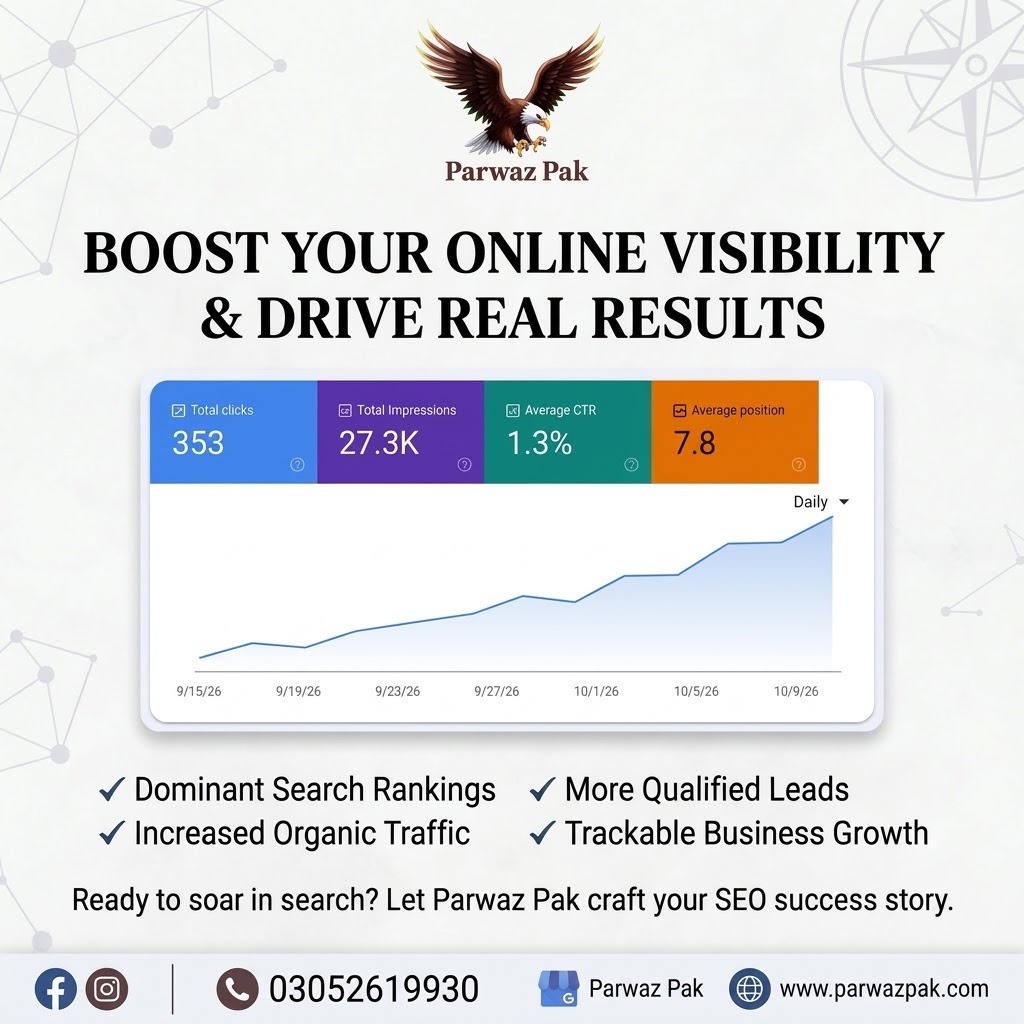
- Google Search Console for impressions, clicks, rankings, and indexing issues
- Google Analytics for traffic, behavior, and conversions
Review the data regularly, find which pages perform well, and improve those that don’t. Treat SEO as an ongoing cycle of testing and refining.
FAQ’s
What are the basic factors of SEO?
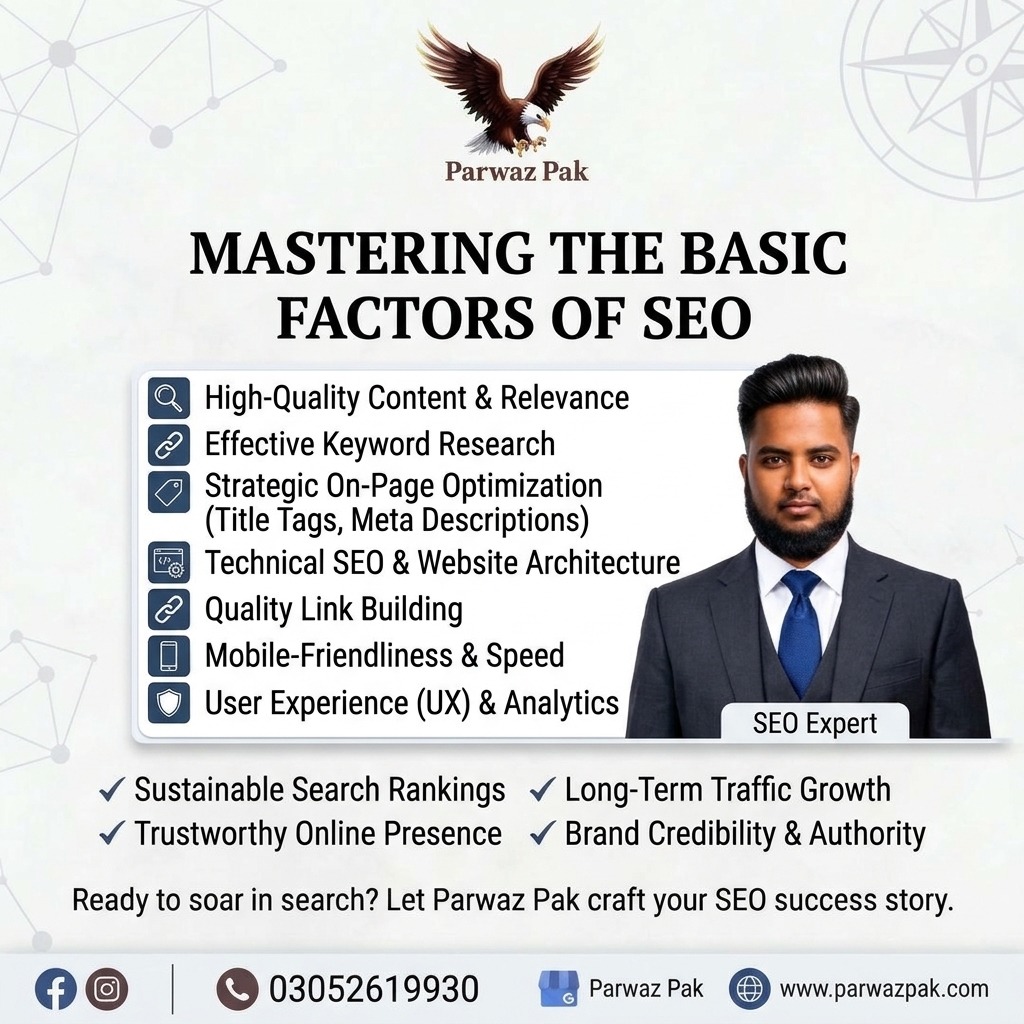
The core factors are keyword research, quality content, on-page optimization, technical health (speed, mobile-friendliness, security), backlinks, and user experience.
How long does SEO take to show results?
Most sites see meaningful movement in 3 to 6 months, though competitive keywords can take longer. New content and fixes are usually picked up within days or weeks, but rankings build gradually.
Is content or backlinks more important for SEO?
Both matter, but they work together. Quality content gives people a reason to visit and link to you, while backlinks signal trust to search engines. Great content with no links can struggle, and links to weak content won’t hold rankings.
Do I need technical skills to do SEO?
Not for the basics. You can handle keyword research, content, titles, and meta descriptions without coding. For deeper technical issues like site speed or crawl errors, a developer or a plugin can help.
Which free tools should beginners use?
Google Search Console and Google Analytics cover performance tracking, while Google Keyword Planner and Google Trends help with keyword research
Final Thoughts
The basic factors of SEO come down to one idea: make it easy for search engines to find your site and give people a reason to stay. Start with solid keyword research, create genuinely useful content, keep your technical foundation healthy, and earn trust through quality links and a great user experience. Master these fundamentals before chasing advanced tactics, and your site will be well positioned for steady, lasting organic growth.