What is off-page SEO?
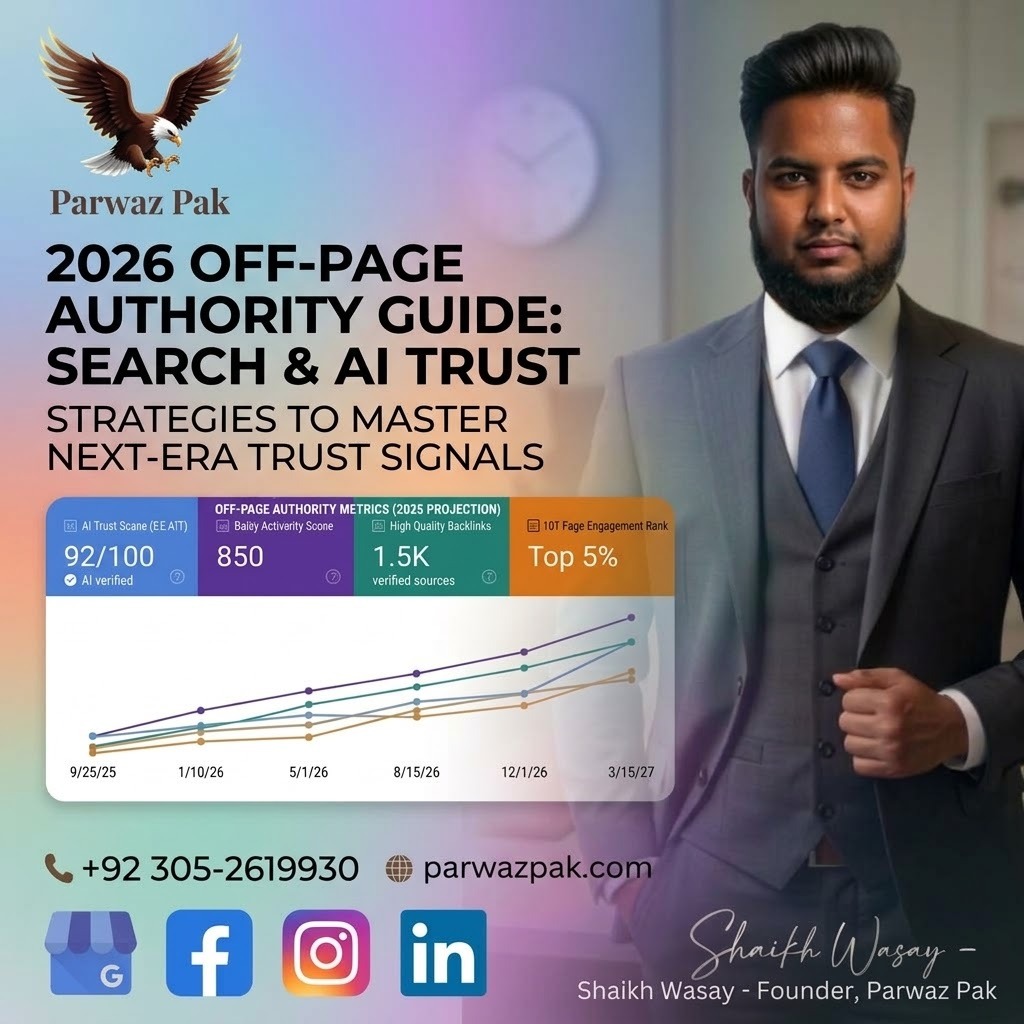
Off-page SEO is everything you do outside your own website to build its authority, reputation and trustworthiness. It includes earning backlinks, getting brand mentions, collecting reviews, building a consistent presence across platforms, and being recognized as a credible entity in your field. Search engines and AI systems use these external signals to decide whether your site deserves to rank or be cited.
Why off-page SEO matters more in the AI search era
AI search tools such as Google’s AI features, ChatGPT search and Perplexity don’t answer a question with one lookup. They break it into several related sub-questions, a process commonly called query fan-out, then retrieve sources for each one. To be cited, your site must appear credible across many of those sub-queries, not just the main keyword.
Off-page signals help here because they show that other independent sources recognize you. Typical fan-out sub-questions include:
- Who is behind this website or brand?
- Is the brand mentioned or recommended elsewhere?
- Do real people review or discuss it?
- Is the author an actual expert on this topic?
If the answers are scattered or missing, the AI has no reason to trust you over a competitor. Off-page SEO makes sure the answers exist and agree with each other.
How off-page SEO connects to E-E-A-T
Google’s quality guidelines describe E-E-A-T: Experience, Expertise, Authoritativeness and Trustworthiness. Off-page work supports each part:
| E-E-A-T | Off-page proof |
|---|---|
| Experience | Case studies, reviews and community discussions showing real use |
| Expertise | Expert quotes, podcast appearances, guest articles under a named author |
| Authoritativeness | Backlinks and mentions from respected sites in your niche |
| Trustworthiness | Consistent business details, honest reviews, transparent ownership |
Google has stated that trust is the most important of the four, so never trade it for shortcuts.
9 off-page SEO strategies that work
1. Earn backlinks with original, useful content
One link from a relevant, respected site is worth more than dozens from low-quality directories. The most reliable link magnets are original research, surveys, free tools, data studies and detailed guides based on first-hand experience. Publish something others want to cite, then tell the right people about it.
2. Do digital PR
Pitch journalists and editors with a genuine angle: your data, a trend you’ve spotted, or expert commentary. Respond to media requests in your niche with short, specific, quotable answers. Earned coverage gives you both a link and a third-party endorsement.
3. Write guest articles for relevant publications
Contribute only to sites your audience actually reads. Use your real name, a real bio and links to your profiles. Guest posting done for value builds authority, but mass-produced guest posts for links violate Google’s spam policies, so avoid them.
4. Build brand mentions, even without links
Unlinked mentions still help search engines and AI models understand that your brand exists and what it is known for. Aim to be mentioned next to the topic you want to own, for example “[Brand] for [topic]”.
5. Strengthen your entity across the web
Make it easy for machines to confirm who you are. Keep your brand name, description, address, logo and social profiles identical everywhere:
- Google Business Profile (if you serve a local area)
- LinkedIn company page and author profiles
- Crunchbase, relevant industry directories and association listings
- Wikidata or Wikipedia, only if you meet their notability and sourcing rules
- An About page that links to all of these
Back this up on your site with Organization and Person schema using sameAs links.
6. Collect genuine reviews and testimonials
Encourage real customers to review you on Google, Trustpilot or niche platforms. Respond to reviews professionally, including negative ones. Never buy, fake or incentivize reviews dishonestly. This damages trust and can lead to penalties.
7. Participate in communities
Reddit, Quora, LinkedIn, Facebook groups and industry forums are where real people discuss real problems. Answer questions with honest expertise and disclose your affiliation. Helpful, non-promotional contributions get quoted and referenced, and AI systems often draw on this kind of discussion.
8. Use video and podcasts
Appear as a guest on podcasts and publish useful YouTube content. Transcripts, show notes and guest pages create more credible mentions of your name and brand on trusted domains.
9. Build relationships, not just links
Partner with complementary businesses, sponsor local or industry events, speak at webinars and join professional associations. Relationships produce natural links and mentions that last.
What to avoid
Google’s spam policies target manipulative link practices. Stay away from:
- Buying or selling links that pass ranking credit
- Private blog networks (PBNs)
- Large-scale link exchanges
- Automated comment, forum or profile spam
- Fake reviews and fake author profiles
- Over-optimized exact-match anchor text
Short-term gains from these tactics are not worth the risk of lost rankings and lost trust.
How to measure off-page SEO
Track quality, not just quantity:
- Referring domains: relevance and trust of linking sites
- Branded search volume: rising searches for your brand name signal growing awareness
- Brand mentions: linked and unlinked (tools like Google Alerts help)
- Review rating and volume
- Referral traffic: visitors who actually arrive from external sites
- AI visibility: periodically ask AI tools questions in your niche and note whether, and how, your brand is cited
A simple 30-day off-page action plan
Week 1: Audit your brand’s presence. Search your brand name, fix inconsistent details and complete all key profiles.
Week 2: Publish one original, data-backed or experience-based asset worth linking to.
Week 3: Pitch that asset to 10 relevant journalists, bloggers or publications. Join two communities and start helping.
Week 4: Request reviews from satisfied customers, pitch one podcast, and review your results.
Frequently asked questions
Is off-page SEO only about backlinks?
No. Backlinks are a major part, but brand mentions, reviews, social and community presence, and overall reputation all contribute.
How long does off page SEO take to work?
Usually several months. Authority builds gradually, and links and mentions need time to be discovered and trusted.
Does off-page SEO help with AI search visibility?
Yes, indirectly. AI systems look for sources that are credible and corroborated across the web, and off-page signals are how that corroboration is built. No tactic can guarantee a citation.
What is the difference between on-page and off-page SEO?
On-page SEO covers what you control on your site: content, structure and technical setup. Off page SEO covers external signals such as links, mentions and reputation.
Conclusion
Off-page SEO is reputation building. Create content worth citing, earn mentions from credible sources, keep your brand identity consistent everywhere, and be transparent about who you are. Do this steadily and both search engines and AI systems will have solid reasons to trust and cite your website.